 | 1.5 LU | HSW |
Date/Time: November 7, 2026 | 10:15 – 11:45 am
Room: TAHOMA 5
Abstract: A school planned today will still be operating in 2076, educating students who haven’t been born yet and supported by educators and facilities leaders who may still be in elementary school today. Yet we are planning these buildings in a time when technology, environmental concerns, workforce demand, and learning models are evolving faster than a facility’s lifecycle. How can we design schools that remain relevant and resilient for the next 50 years?
This dynamic 90-minute session begins with a rapid, visual “mindset shift” on how school and daily life transformed from 1880 to 2020 from pre-electric buildings to digitally connected campuses, and from pre-pandemic norms to new expectations for health, flexibility, and continuity. Participants will explore why resilience is the next evolution of sustainability, moving beyond efficiency to designing schools that can absorb disruption, recover quickly, and adopt over time.
This sets up the real question: what changes do we anticipate between 2026 and 2076, and what should we be doing right now to set up for success? Audience members will form school district teams of 6-7 people and use a guided gameboard to project a timeline of decade-by-decade changes over the next 50 years for a chosen stakeholder persona (student, teacher, community member, facilities director, etc.) Then using a scenario lens (such as natural disaster, social upheaval, or technology acceleration) they will stress-test assumptions and build a phased facilities strategy:
The session concludes with a share-out of “no-regrets” strategies that strengthen infrastructure, human capacity, and financial resilience so schools remain safe, functional, and relevant for the communities they serve.
Participants will leave with practical tools, fresh perspective, and new ways to think about designing schools not just for today’s needs but for the future we cannot yet see.
Learning Objectives:
Educational Visioning
Facilitating the translation of educational goals/vision into school design requirements.

Shona is a licensed architect with 15-years of experience working with school districts on new construction and renovation projects and developing a deep understanding of educational communities. As PBK’s Firmwide Director of Sustainability, her work focuses on integrating sustainable technologies and resilient strategies. Shona is active with AIA, A4LE, CASH, and USGBC, and is dedicated to advancing innovative, sustainable, and welcoming learning environments, ensuring that educational facilities meet today’s demands while preparing for tomorrow’s challenges.
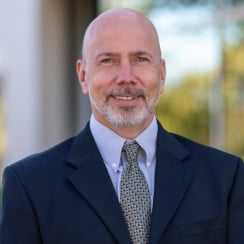
Jeff has over 30 years of experience in K-12 and higher education design, including referendum planning, programming, design, project management, and construction administration. As a Principal and Design Director, he works with districts to translate educational vision into innovative, next-generation learning environments and guides projects through to construction. His work focuses on educational visioning, building design, and sustainability integration. Jeff serves as PBK’s senior educational planner and is active with AIA, A4LE, and CASH.

Carey serves as the Chief Operations Officer for the Santa Monica – Malibu Unified School District, where for the past 18 years he has led Facility Improvements, Maintenance & Operations, and Facility Use. He oversees the district’s ambitious program to modernize and rebuild its campuses, guiding more than $1.9 billion in voter-approved general obligation bonds. His leadership has shaped transformative projects including the award-winning Discovery Building at Santa Monica High School – the first K-12 facility designed using the Open Building concept and a finalist for the World Architecture Awards—as well as the new Malibu High School campus.
Carey’s journey to supervising school facilities might seem unconventional. Before developing school facilities, he directed, designed, produced, and stage managed more than 400 theater productions at major regional theaters. He also taught in high school, university and professional theater programs. This blend of creative, technical, and educational experience fuels his passion for designing learning environments that are flexible, inspiring, and deeply connected to the communities they serve.
 |
Seattle Convention Center
705 Pike Street
Seattle, WA 98101
November 4-7, 2026
Email: donna@a4le.org
+1 480.391.0840