 | 1.5 LU | HSW |
Date/Time: November 7, 2026 | 10:15 – 11:45 am
Room: TAHOMA 3
Abstract: What does it mean to be “future-ready” in 2026? As artificial intelligence handles more of the routine and data-heavy tasks of the modern world, student success will increasingly depend on uniquely human strengths: connecting with others, making value-driven judgments, and imagining what’s next.
This session is a collaborative forum led by expert practitioners who have been mapping these human capabilities to the physical school environment. Using the MIT Sloan EPOCH framework as a guide, we will explore five “human-intensive” aptitudes—Empathy, Presence, Opinion, Creativity, and Hope—that are becoming the essential currency of the new knowledge economy.
Join us for a dynamic, four-part workshop where we move beyond tech-talk to focus on the heart of design:
This is a chance for architects, planners, and district leaders to move from reacting to technological shifts to proactively designing for the human brilliance that follows.
Learning Objectives:
Educational Visioning
Facilitating the translation of educational goals/vision into school design requirements.
Design of Educational Facilities
Aligning Educational & Community vision with design to support a regenerative mindset for a sustainable and future-ready Educational Facility.

Royce is a Principal and Design Director with 20 years of experience leading projects—from large campuses to neighborhood school renovations—across the Pacific Northwest, California, and Colorado. Known for disciplined execution and listening, Royce ensures community voices are central to the design process. He creates environments that inspire students and empower educators, believing that the best solutions are discovered through a collaborative process grounded in empathy and a shared purpose for every community served.
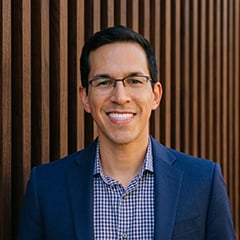
Daniel is a Senior Principal and Design Director with over a decade of experience leading an extensive portfolio of projects—from academic campuses and performance centers, to specialized CTE facilities—across California, the Southwest, and abroad. Known for balancing creative vision with technical rigor, Daniel ensures concepts are grounded in community goals. He shapes environments that empower students and educators, leveraging his depth of knowledge and experience to guide teams toward successful, high-performance outcomes.
 |
Seattle Convention Center
705 Pike Street
Seattle, WA 98101
November 4-7, 2026
Email: donna@a4le.org
+1 480.391.0840