 | 1 LU |
From Buildings to Belonging: When Students Author Space
| 1 LU |
Date/Time: November 6, 2026 | 2:15 – 3:15 pm
Room: TAHOMA 3
Abstract: Most school design processes are shaped by professional expertise, with students positioned primarily as end users rather than contributors to architectural authorship. This session reframes that paradigm, examining how structured student participation can function not as consultation, but as a form of design intelligence capable of influencing architectural intent, spatial hierarchy, and contextual response.
Through the KRESA Career Connect Campus case study, presenters will unpack a multi-day co-design process in which CTE students collaborated with architects, educators, entrepreneurs, and industry partners to generate and present spatial narratives and design propositions. These contributions informed critical decisions regarding program distribution, adjacencies, circulation, site relationships, and connections to landscape and natural systems – demonstrating how non-traditional authorship can meaningfully shape contextual, place-based design.
The session presents a structured yet adaptable charrette framework that intentionally creates space for student choice, curiosity, and exploration. Rather than prescribing a single mode of participation, the framework allows students to pursue areas of interest, define problems, and select modes of representation, resulting in deeper engagement and more meaningful design contributions. Applied to CTE and K–12 contexts, this approach demonstrates how a flexible design process can unlock student agency and generate spatial insights that directly inform architectural strategy, contextual response, and learning environment design.
Rather than focusing on engagement as an outcome, the session interrogates translation: how student-generated ideas are curated, synthesized, and transformed into buildable architectural strategies within the realities of schedule, budget, and governance. Participants will explore moments where student perspectives disrupted conventional assumptions and produced design solutions that professional teams alone may not have conceived.
Attendees will leave with a flexibly structured framework for student co-design and a deeper understanding of co-authorship as a strategic methodology for creating learning environments that are intellectually, spatially, and socially resonant.
The presentation will feature written and video commentary from participants of the multi-day CTE co-design workshops.
Learning Objectives:
Design of Educational Facilities
Aligning Educational & Community vision with design to support a regenerative mindset for a sustainable and future-ready Educational Facility.
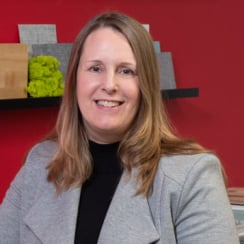
Christine is an architect who leads multidisciplinary teams in translating district vision into high-performing, contextually responsive learning environments. Certified in educational planning and specifications writing, she strives to integrate instructional, operational, and sustainability priorities into contract documents. With over a decade of experience teaching college-level design studios, she brings a deep understanding of methodologies for student engagement and collaborative learning. Christine previously worked for architect Michael Graves, recipient of the 1999 National Medal of Arts.
George brings over three decades of architectural leadership and educational facility expertise to his role as Regional Director at Wightman. With a portfolio exceeding $15 billion in constructed value, George has guided transformative projects that elevate student outcomes and community impact. He played a pivotal role in leading successful capital improvement programs for many educational clients across the country and is a trusted voice in the design of forward-thinking Career and Technical Education (CTE) environments. A passionate advocate for service, trust, and collaboration, George helps clients realize spaces that support the next generation of learners and local economies.
Sarah serves as Executive Director of Workforce and Community Initiatives at the Kalamazoo Regional Educational Service Agency, where she leads Career and Technical Education (CTE), Education for the Arts, Early/Middle College, workforce development, and community partnership initiatives serving students throughout Kalamazoo County. A passionate advocate for student success and career readiness, Sarah has been instrumental in aligning educational programming with regional workforce needs. She played a key leadership role in the planning, design, and launch of the innovative Career Connect Campus, helping create transformative learning environments that connect students with high-demand careers, industry partners, and postsecondary opportunities while strengthening the region's talent pipeline and economic vitality.
 |
Seattle Convention Center
705 Pike Street
Seattle, WA 98101
November 4-7, 2026
Email: donna@a4le.org
+1 480.391.0840