 | 1 LU | HSW |
Date/Time: November 7, 2026 | 2:00 – 3:00 pm
Room: TAHOMA 1
Abstract: Through the lens of professional expertise and personal experience, four panelists will share their insights for how to create K-12 educational environments that welcome all students, staff, and visitors. Perspectives represent accessibility consultants, architectural designers, and K-12 educators as well as the disabled community as architects, educators, former students, and parents of disabled students. Speakers will discuss the most common barriers they’ve observed in schools, offer low-cost solutions for barrier removal in existing environments as well as considerations for early planning of new educational facilities, and share best practices for creating a dialogue with and gathering community feedback. Attendees will come away with a deeper understanding of what makes an educational environment truly inclusive and actionable ways to improve the built environment of the institutions they serve.
Learning Objectives:
Design of Educational Facilities
Aligning Educational & Community vision with design to support a regenerative mindset for a sustainable and future-ready Educational Facility.
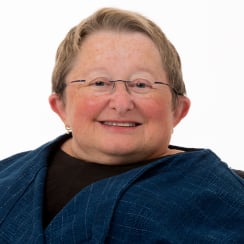
Since 1990, Karen has deftly combined her lived experience as a member of the disabled community and her professional expertise in architecture to support project partners in the design, development, and construction community in creating beautiful, barrier-free spaces. Her “good fight” has consistently focused on supporting equity and full inclusion for persons with disabilities. In 2019, she received the AIA Whitney M. Young, Jr. medal for her work in disability rights.
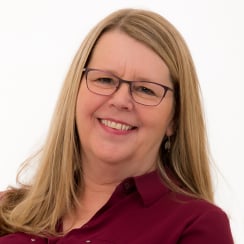
Joyce wears many hats. Prior to leading project management and co-leading the construction observation team as an accessibility specialist at Studio Pacifica, she spent many years working with students with disabilities and athletes in adaptive sports. She is the mother of a wheelchair user and former Paralympic swimmer. Joyce has a deep commitment to advocacy for equity and access and can often be found in the field explaining the “why” behind code requirements.
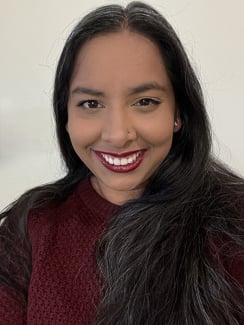
Anita understands the critical importance of disability rights, equity, and advocacy, shaped by her lifetime as a full-time wheelchair user. Having personally navigated barriers to education that still persist, she is deeply committed to ensuring that youth with disabilities not only have access to inclusive systems but also the tools and confidence to shape those systems themselves. Her consistent focus is to cultivate inclusive learning experiences and foster spaces that center joy, creativity, and belonging.
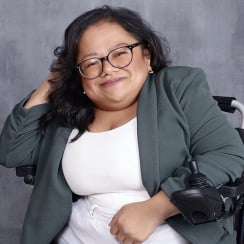
With over 15 years of experience in the architecture and construction industry, Olivia currently works as a Project Architect at Quattrocchi Kwok Architects, working on K-12 educational spaces with specializations in inclusive and universal design. She is also passionate about improving architecture through environmental design research with notable projects that include her Fulbright research on assessing the accessibility of elementary schools in the Philippines. She is currently serving as a Public Member of the U.S. Access Board and a Commissioner for the California Commission on Disability Access and the California Building Standards Commission.
 |
Seattle Convention Center
705 Pike Street
Seattle, WA 98101
November 4-7, 2026
Email: donna@a4le.org
+1 480.391.0840